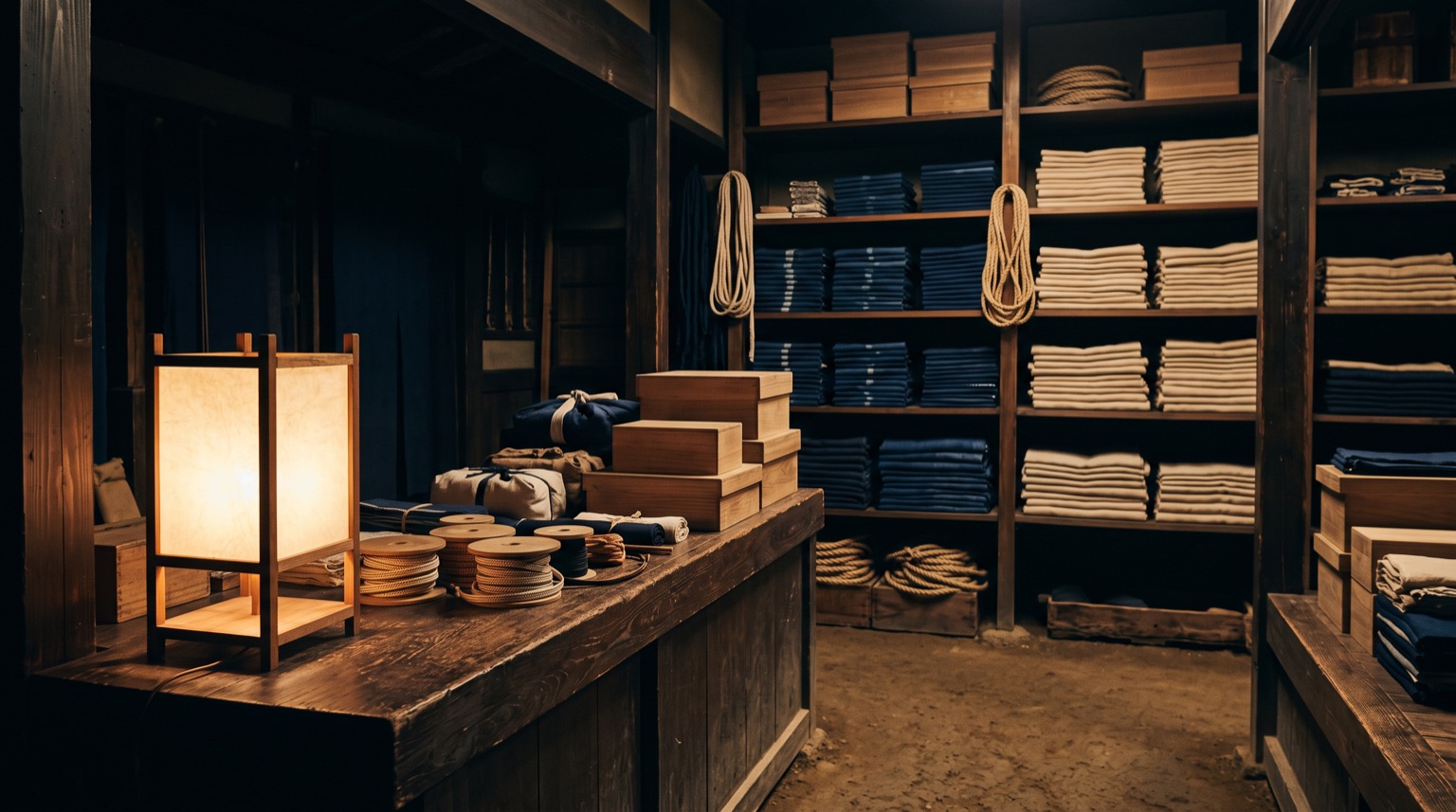
The front room of the shop at night: shelves of folded indigo and hemp cloth, coils of cord, paulownia boxes, and a single paper lantern on the counter.

Everything this house sells is a container.

What the container holds is a separate ledger, and it is not on the shelf. Cloth, cord, oiled paper and paulownia boxes. Itachibori, Osaka, since 天和二年.

包屋 Tsutsumiya · wrapping goods立売堀 Itachibori, Osaka — the ironmongers' quarterOpen from 暮六つ. No address is printed.
帳 一天和二年 霜月The founding entry — the shop opens on cloth

A wrapping house is the least remarkable shop on a street of iron.

Itachibori sells saws, chisels, nails and blade stock by the wharf-load. A house on that lane taking delivery of forged iron is a house doing its accounts.

What Tsutsumiya has actually sold since 1682 is squares of cotton and hemp, flat woven cord, oiled paper, and paulownia boxes in eleven sizes. That is the whole of the front room, and every word of it is true. A merchant who wants a hundred cloths at 二幅 gets a hundred cloths at 二幅, and the ledger says so.

The second ledger is the one this page is about. It lists what goes inside. The house does not forge, weave, dye or braid any of it. Four other houses do, and they are named further down. What this house does is decide what shape a thing must become before it can cross a city, and then make it that shape.

包む tsutsumu, to wrap. 包み隠す tsutsumi-kakusu, to wrap and hide: the ordinary word for covering something up. The house was named before anyone thought it was funny.
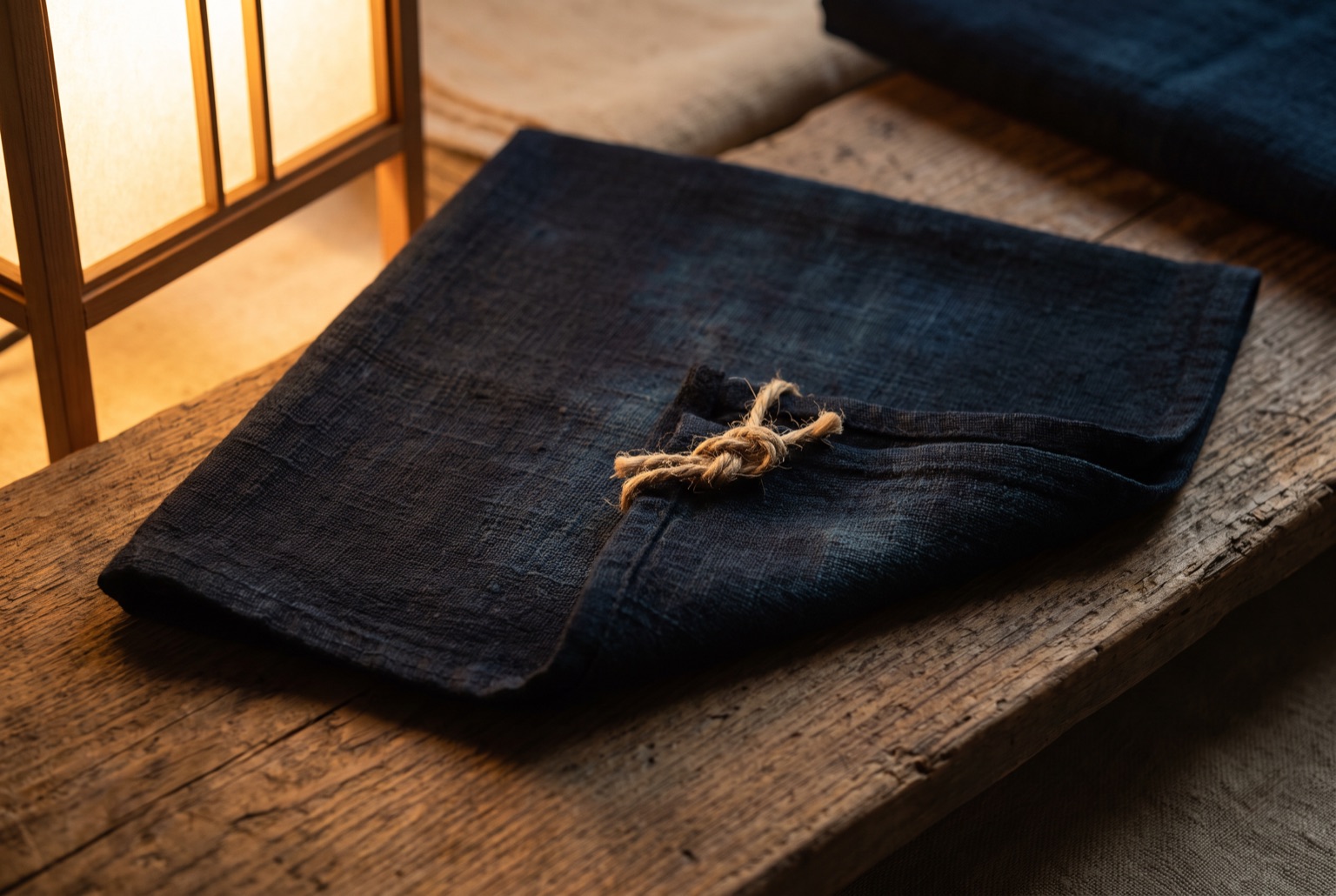
A square of deepest indigo cloth folded on a worn wooden board, one corner turned over, a hemp cord knot half drawn.
褐色 kachi-iro. The darkest shade the indigo vat gives, and the only one the house stocks for this work. Eighteen dips at Tokushima. Its name puns on 勝つ, to win, which is why it was worn and not why it is bought here.
帳 二享保九年 水無月The register is first ruled into columns

The second ledger, as it is ruled.

Each line carries the name the trade uses, the name the maker uses, what it measures, what it weighs, and what it costs in silver. There is no other description because there is nothing else to say.
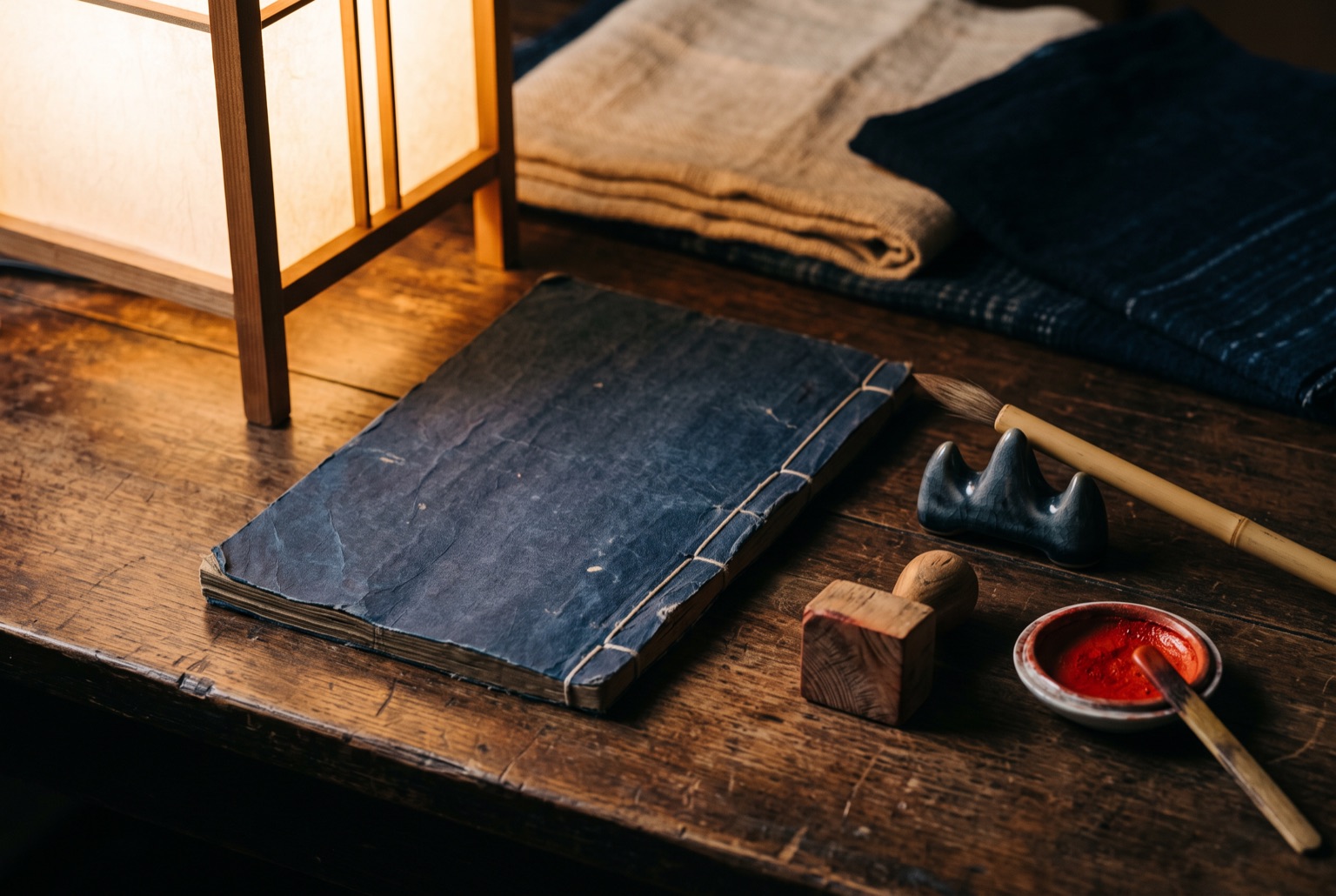
A merchant's account book bound in indigo paper, closed on a wooden desk beside a bamboo brush, a small square seal stamp and a dish of vermilion seal paste.
朱 shu. The seal paste. It is the only colour in the shop, and it goes exactly where the house has put its name to something. That is also the only place it appears on this page.
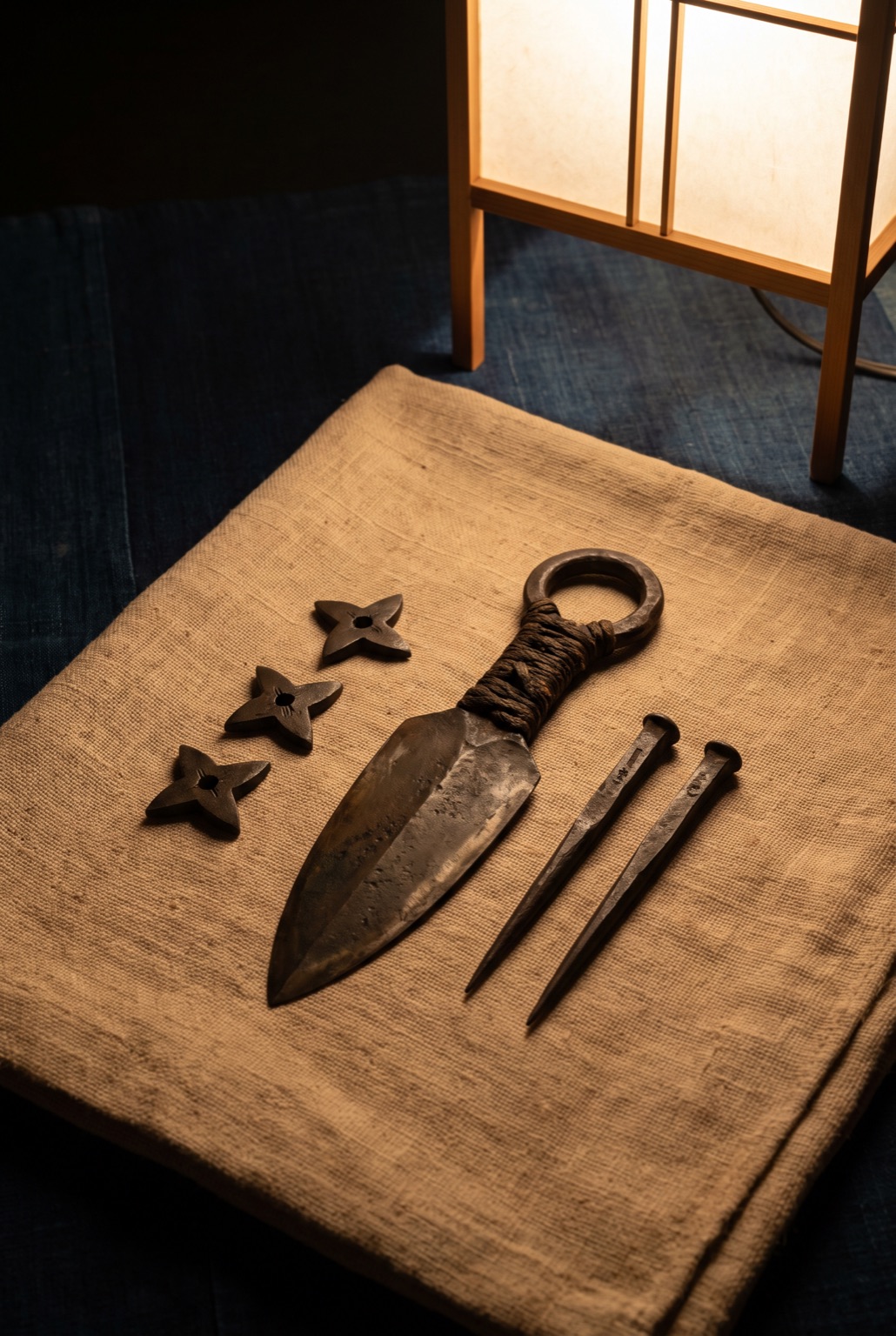
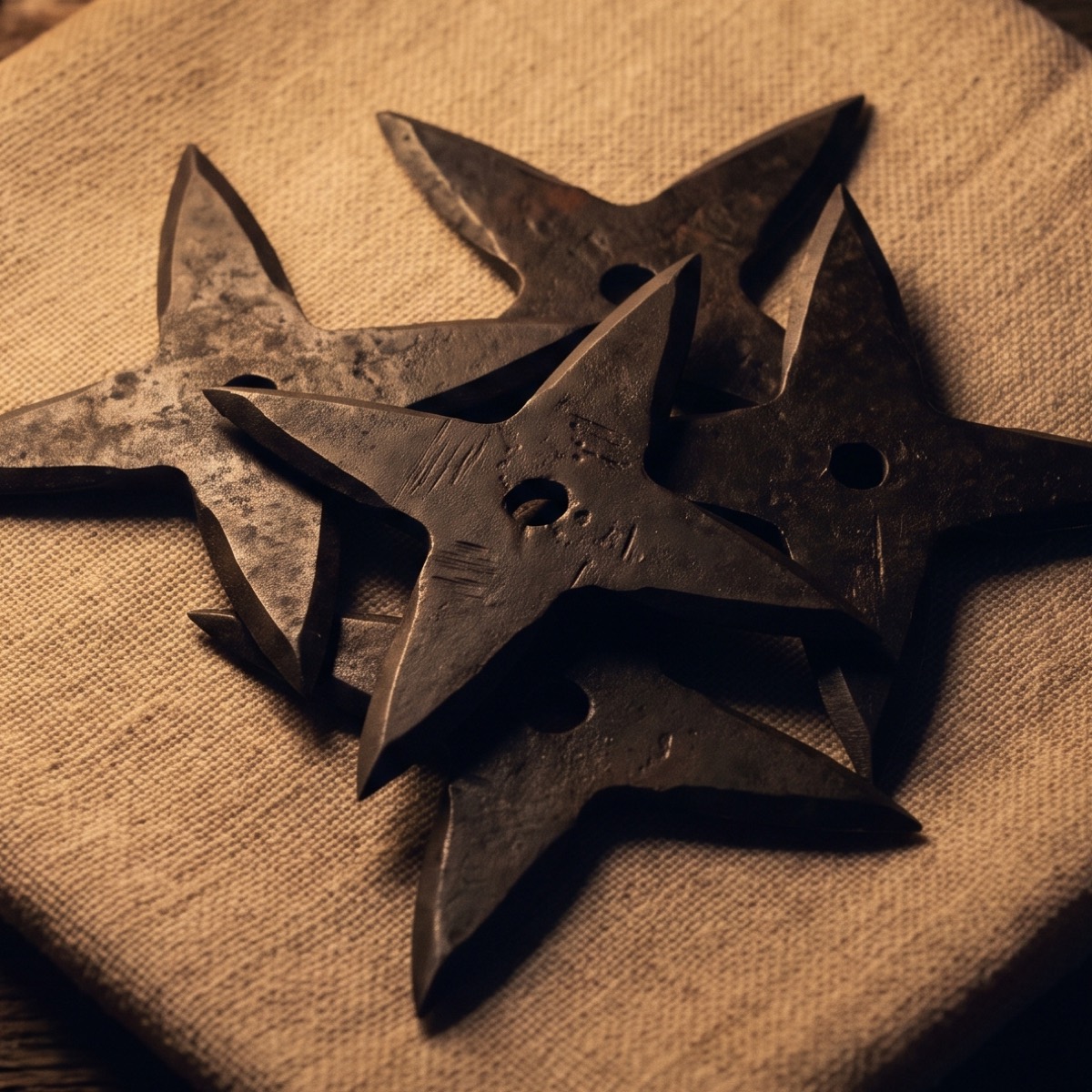
Shuriken, four-point — ten, photographed on unbleached hemp cloth.hoshi — “stars”
車剣Shuriken, four-point — ten

Cut from plate, filed square, hardened at the points only. Ten to a paper packet, packed flat.
3.0 × 3.0 × 1.7sun128 匁the set of ten
30 匁¥42,000wrapped
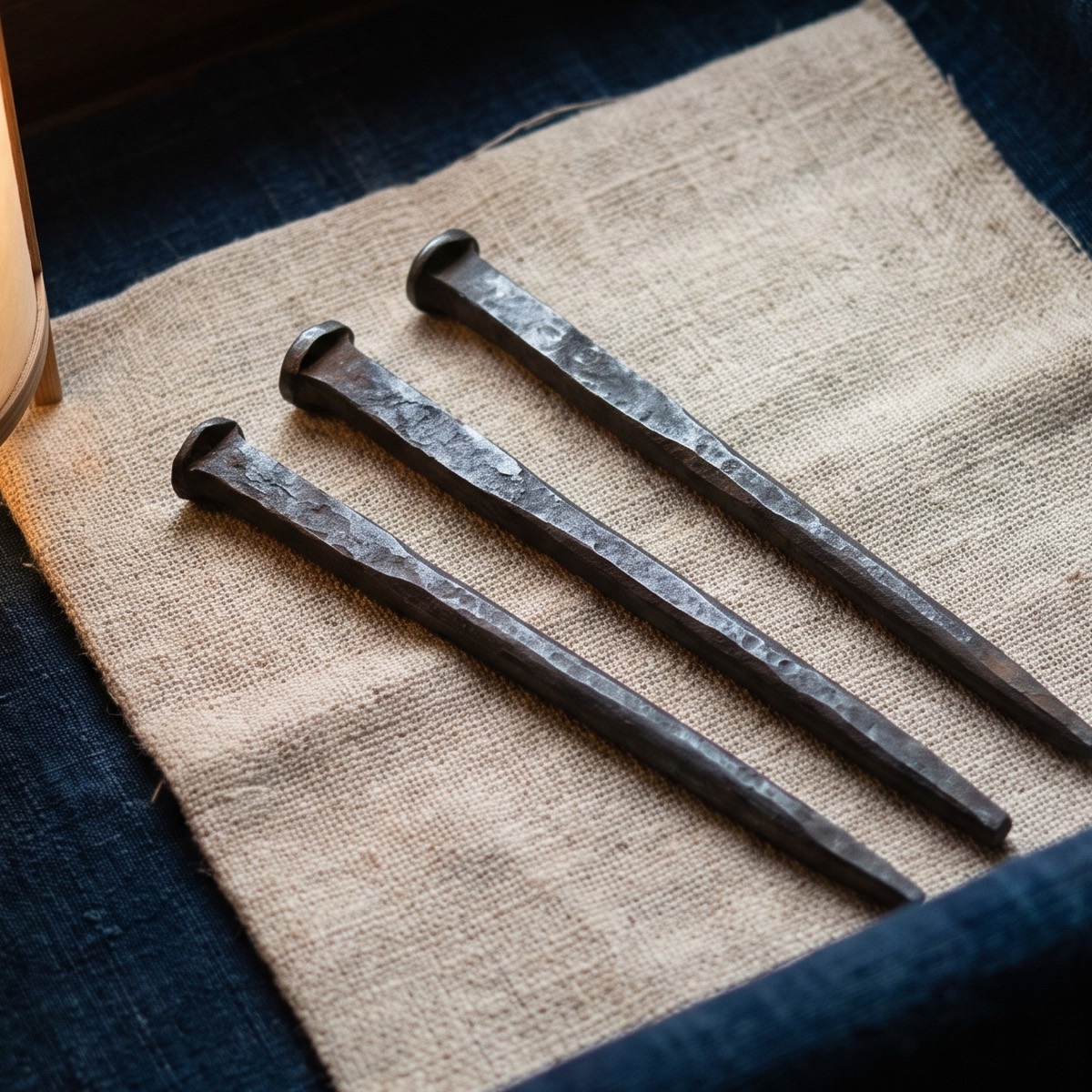
Bō-shuriken, spike — six, photographed on unbleached hemp cloth.kugi — “nails”
棒手裏剣Bō-shuriken, spike — six

Six sun of round stock drawn to a point at one end and left blunt at the other. They roll; they are bedded in hemp.
5.9 × 1.3 × 1.0sun112 匁the set of six
26 匁¥36,000wrapped
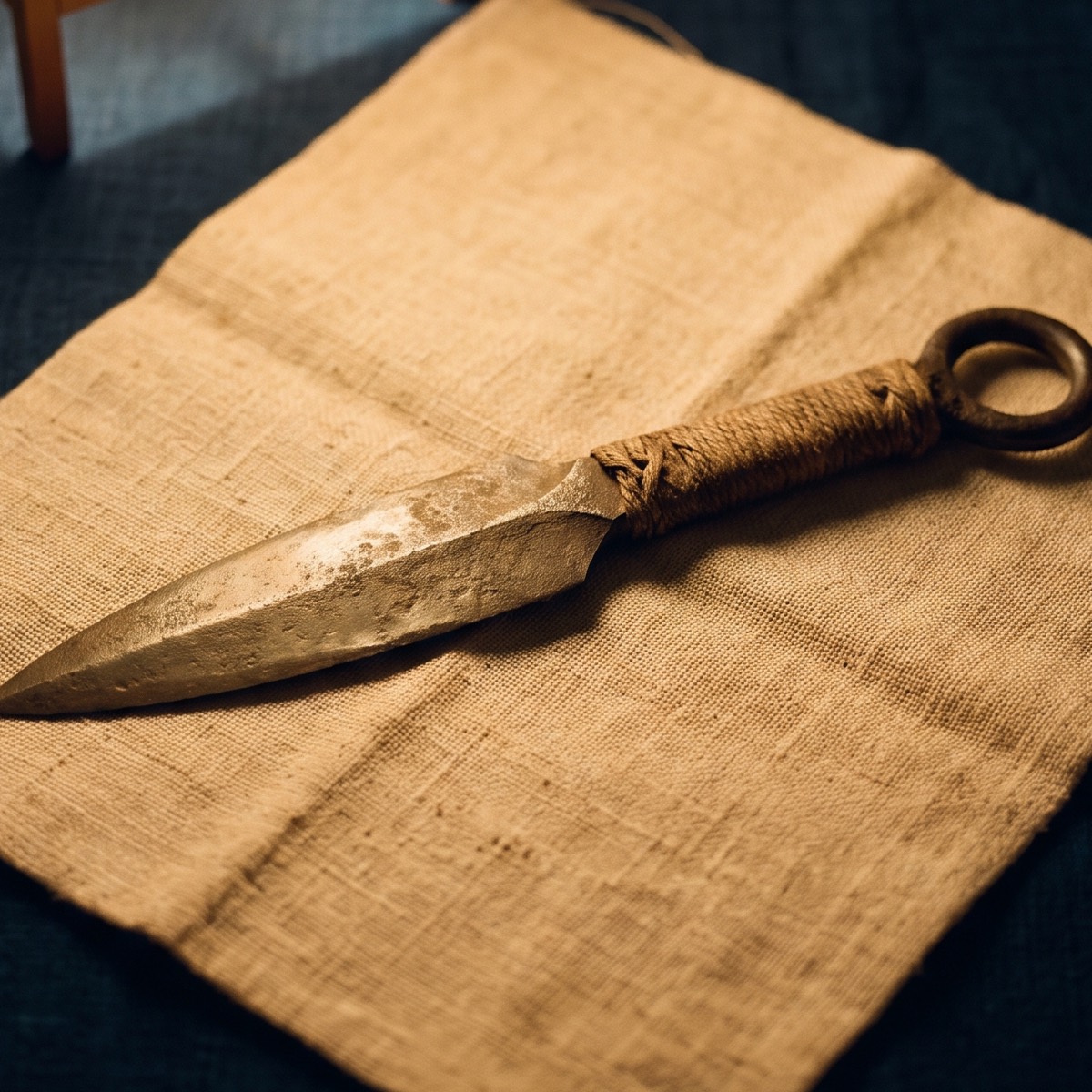
Kunai — the field tool, photographed on unbleached hemp cloth.小手kote — “the small hand”
苦無Kunai — the field tool

A trowel before it is anything else. Digs, pries, wedges, holds a rope. Ring pommel, cord-wrapped.
9.9 × 2.0 × 0.7sun83 匁the each
41 匁¥58,000wrapped
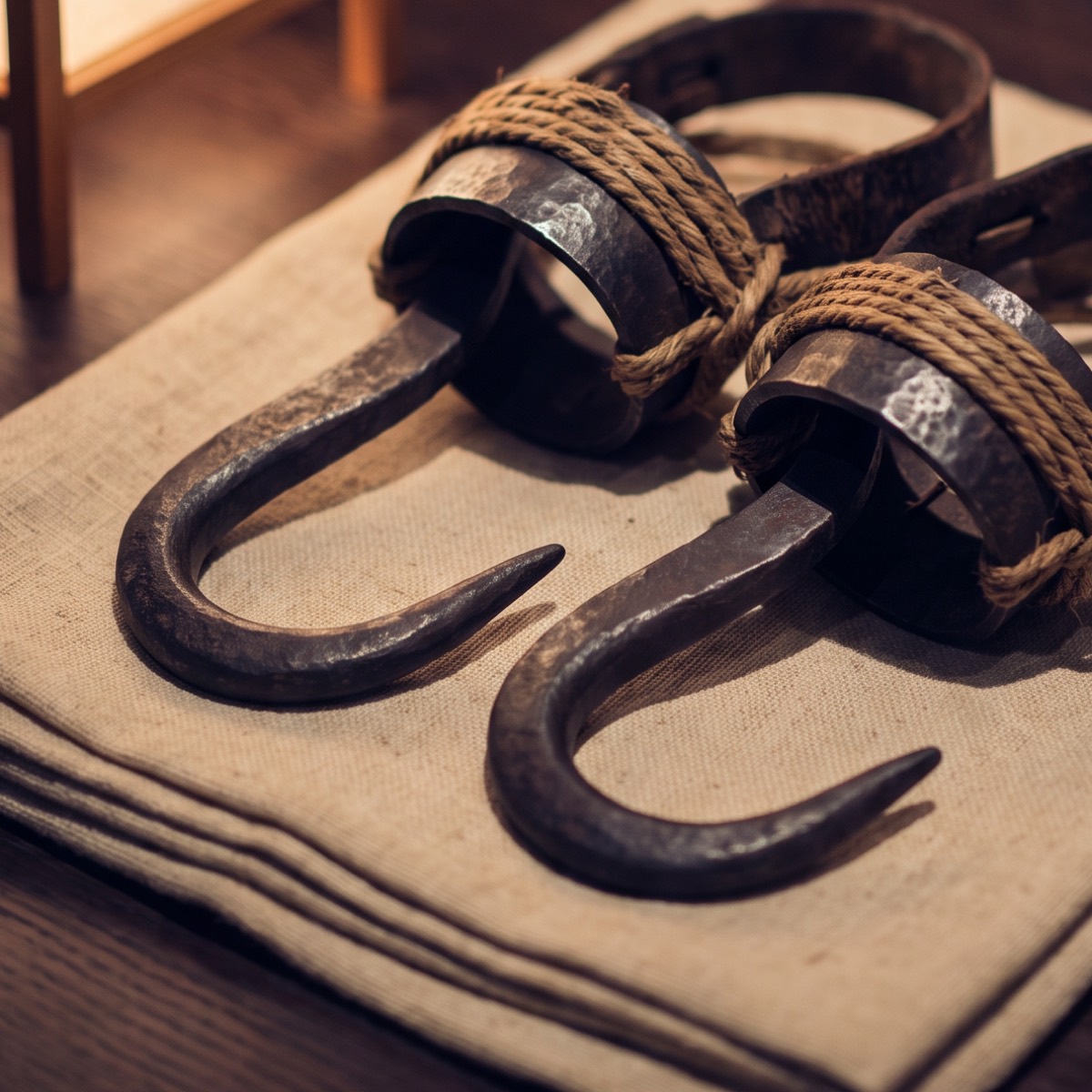
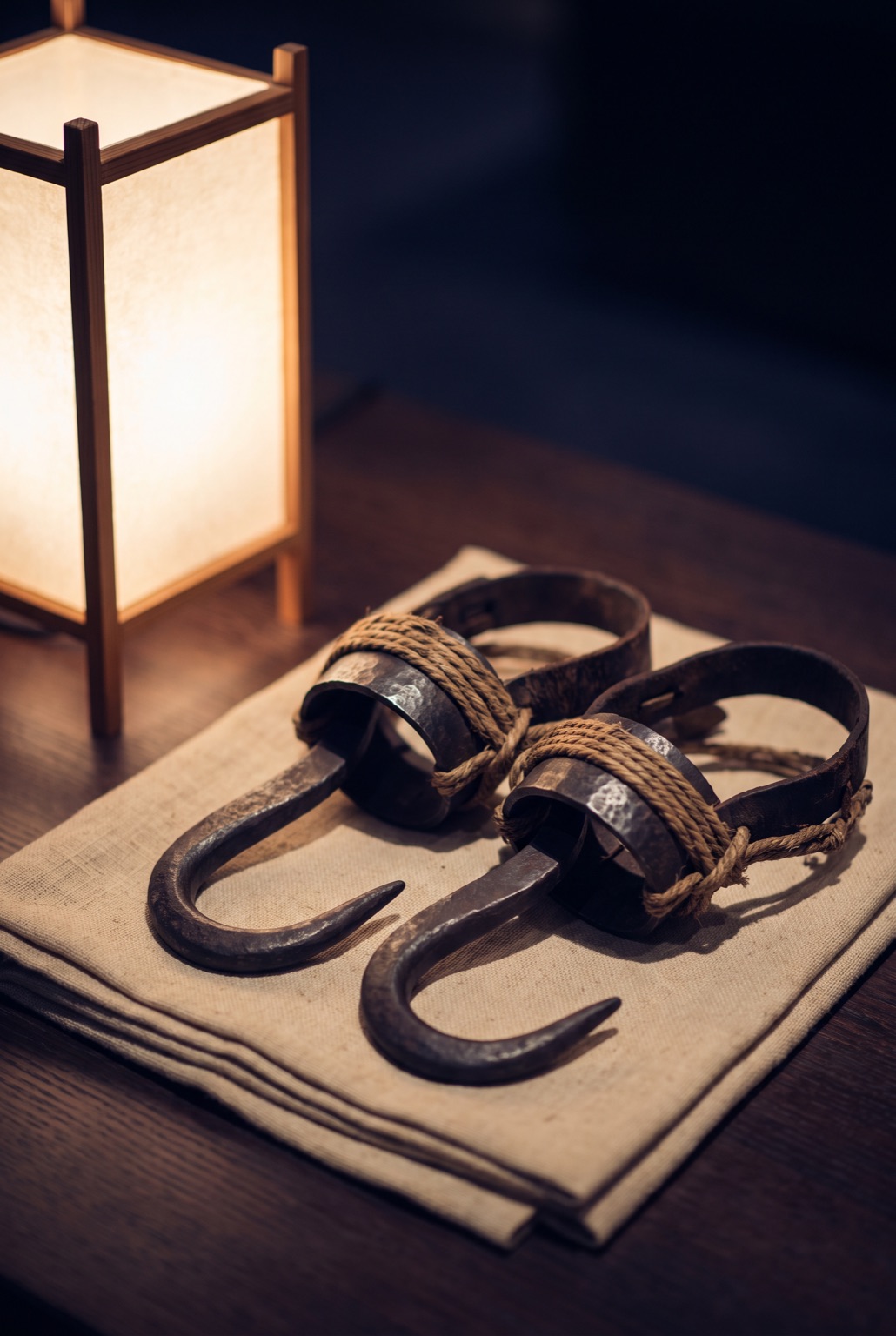
Tekagi, climbing claws — a pair, photographed on unbleached hemp cloth.tsume — “claws”
手鉤Tekagi, climbing claws — a pair

Four hooks to a band, leather over the palm. Sized to the hand; say the span across the knuckles.
5.3 × 3.6 × 1.7sun144 匁the pair
53 匁¥74,000wrapped
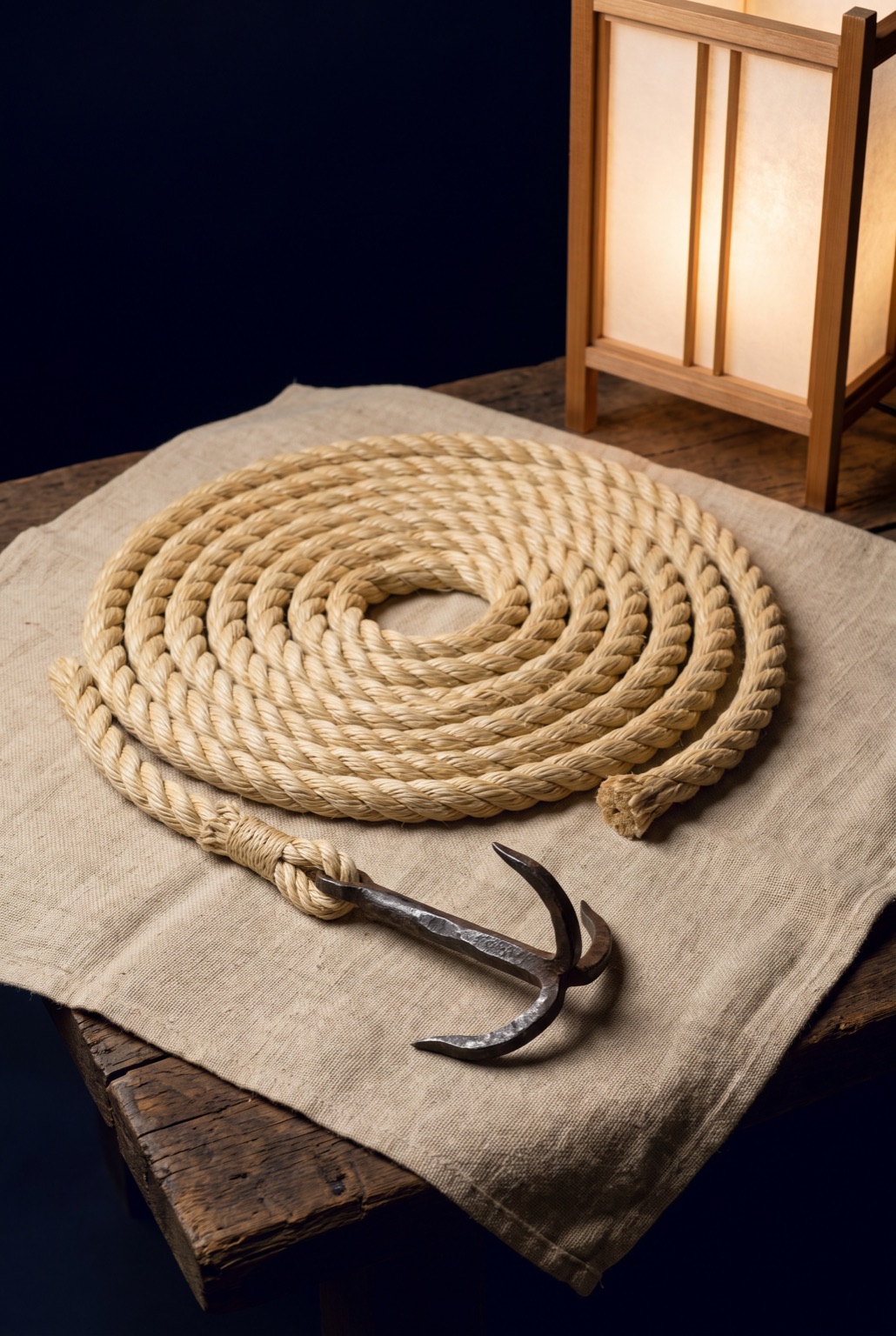
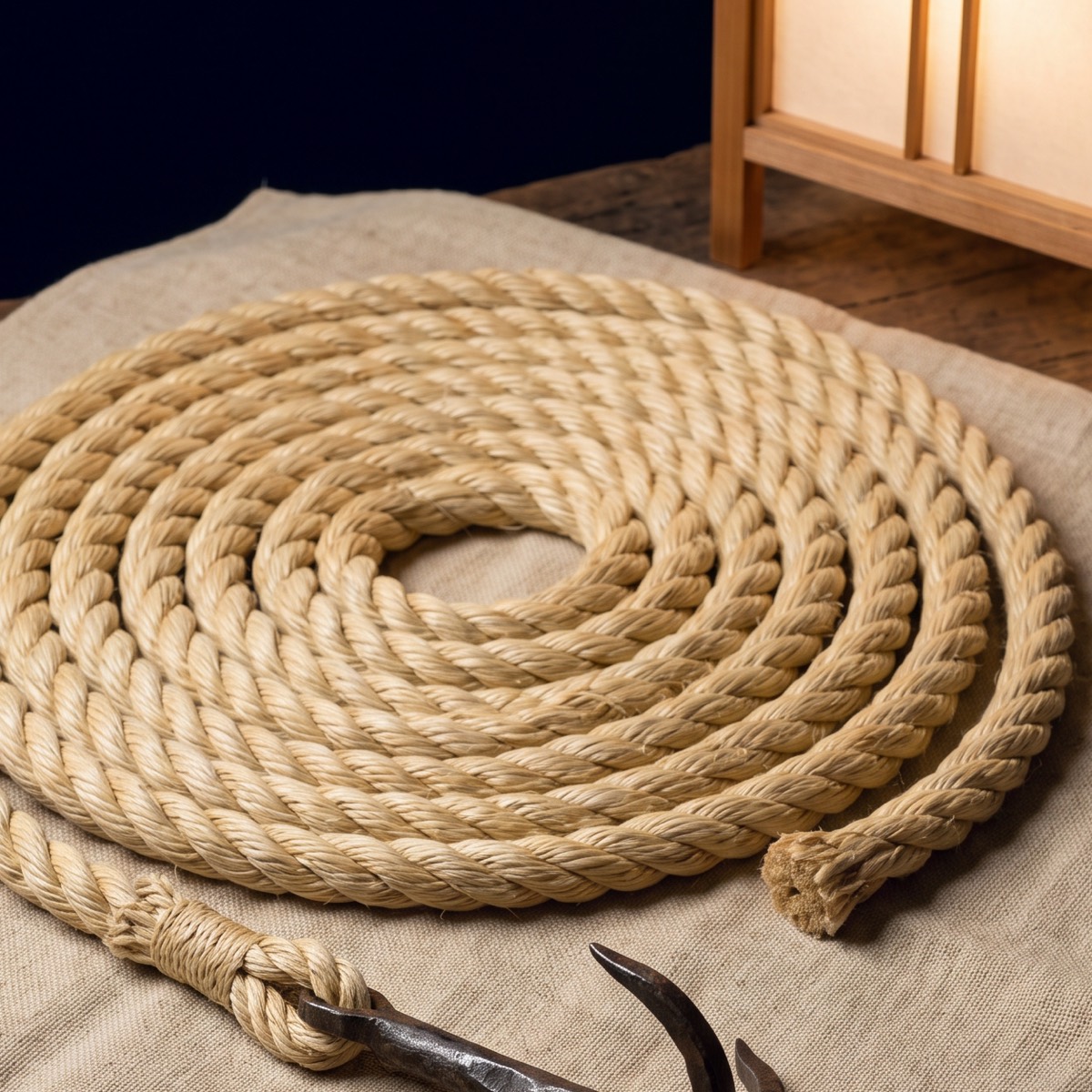
Kaginawa — grapple and twelve ken of rope, photographed on unbleached hemp cloth.夜縄yonawa — “night rope”
鉤縄Kaginawa — grapple and twelve ken of rope

Twenty-one metres of hemp, four-strand, spliced to a four-pronged hook. Hung with eighteen kan for a count of one hundred before it leaves.
8.6 × 8.6 × 3.3sun773 匁the each
69 匁¥96,000wrapped
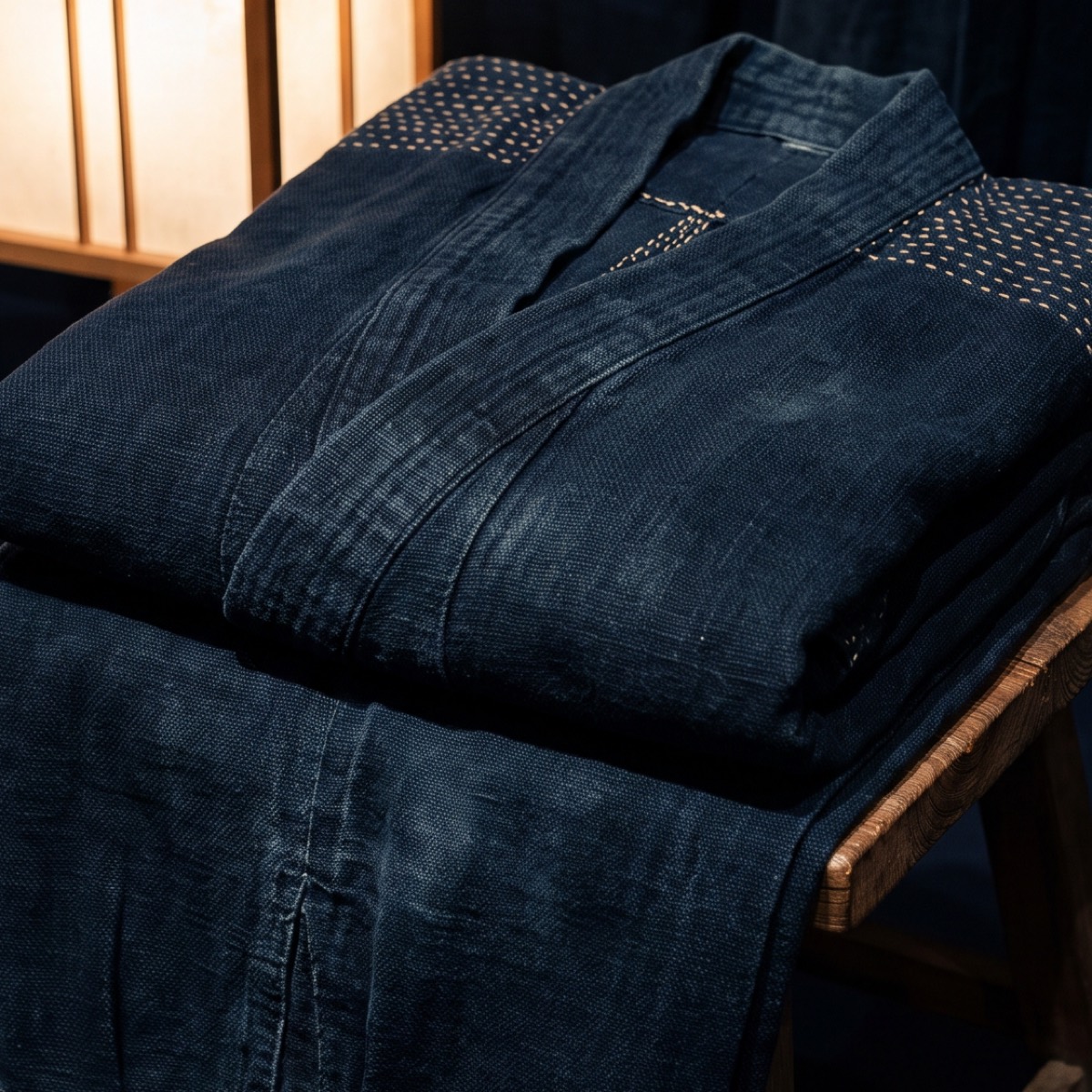
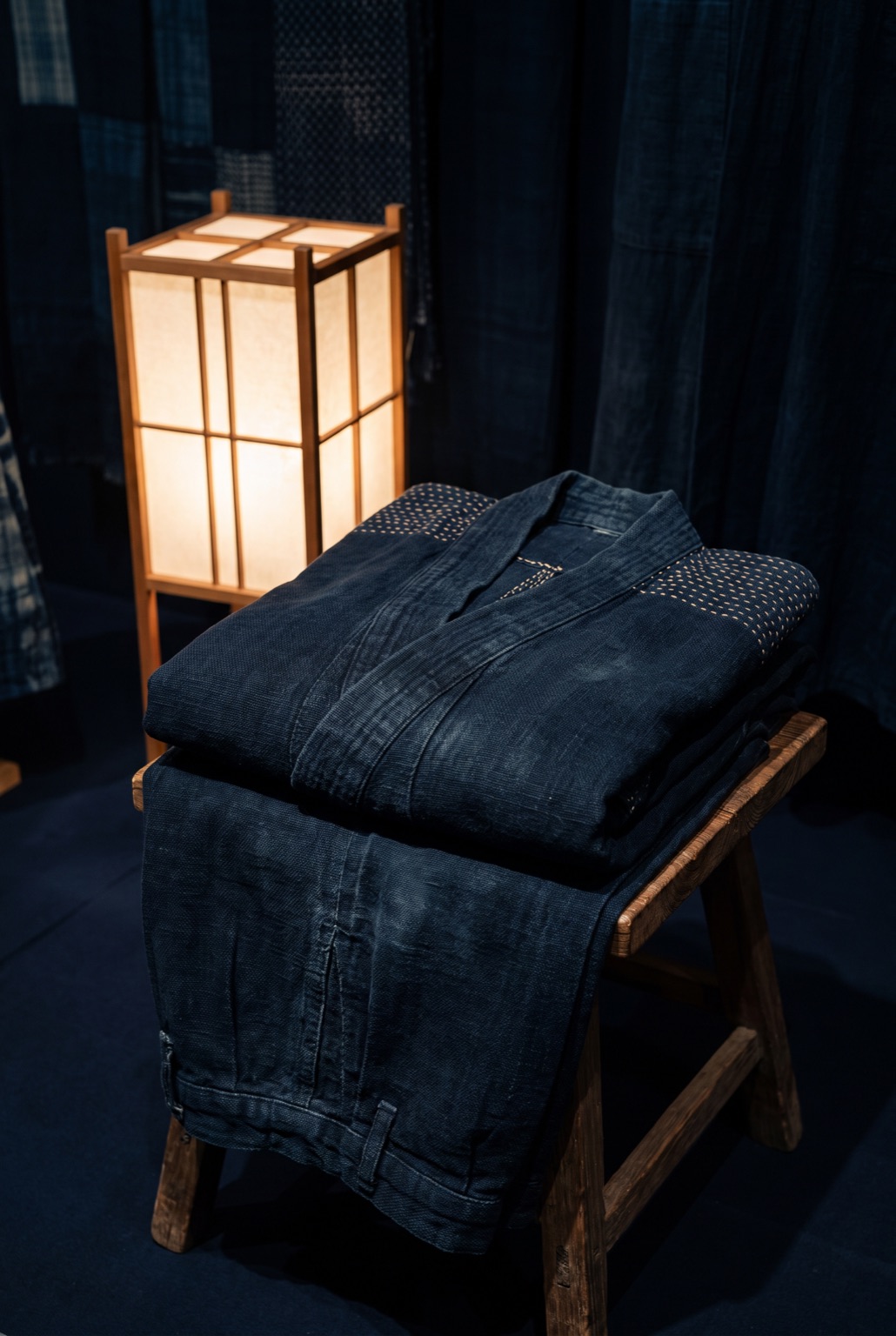
Shinobi shōzoku — jacket, trousers, hood, belt, photographed on unbleached hemp cloth.黒仕kuroshi — “the black work”
忍装束Shinobi shōzoku — jacket, trousers, hood, belt

Kachi-iro from Tokushima, dipped eighteen times. Sashiko through the shoulders and knees. Reversible; the other face is the dull brown of a labourer.
9.9 × 7.3 × 3.0sun440 匁the suit
118 匁¥165,000wrapped
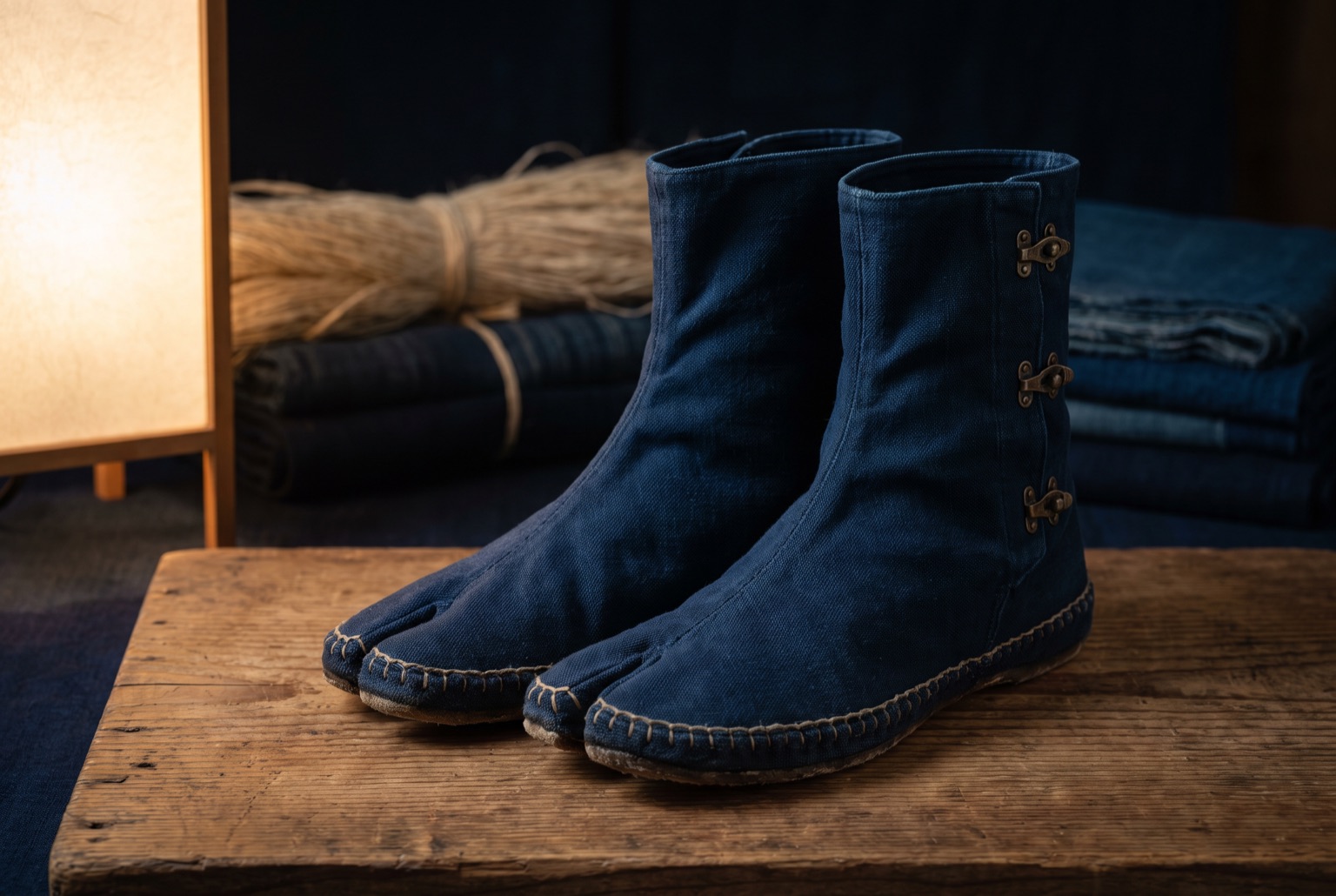
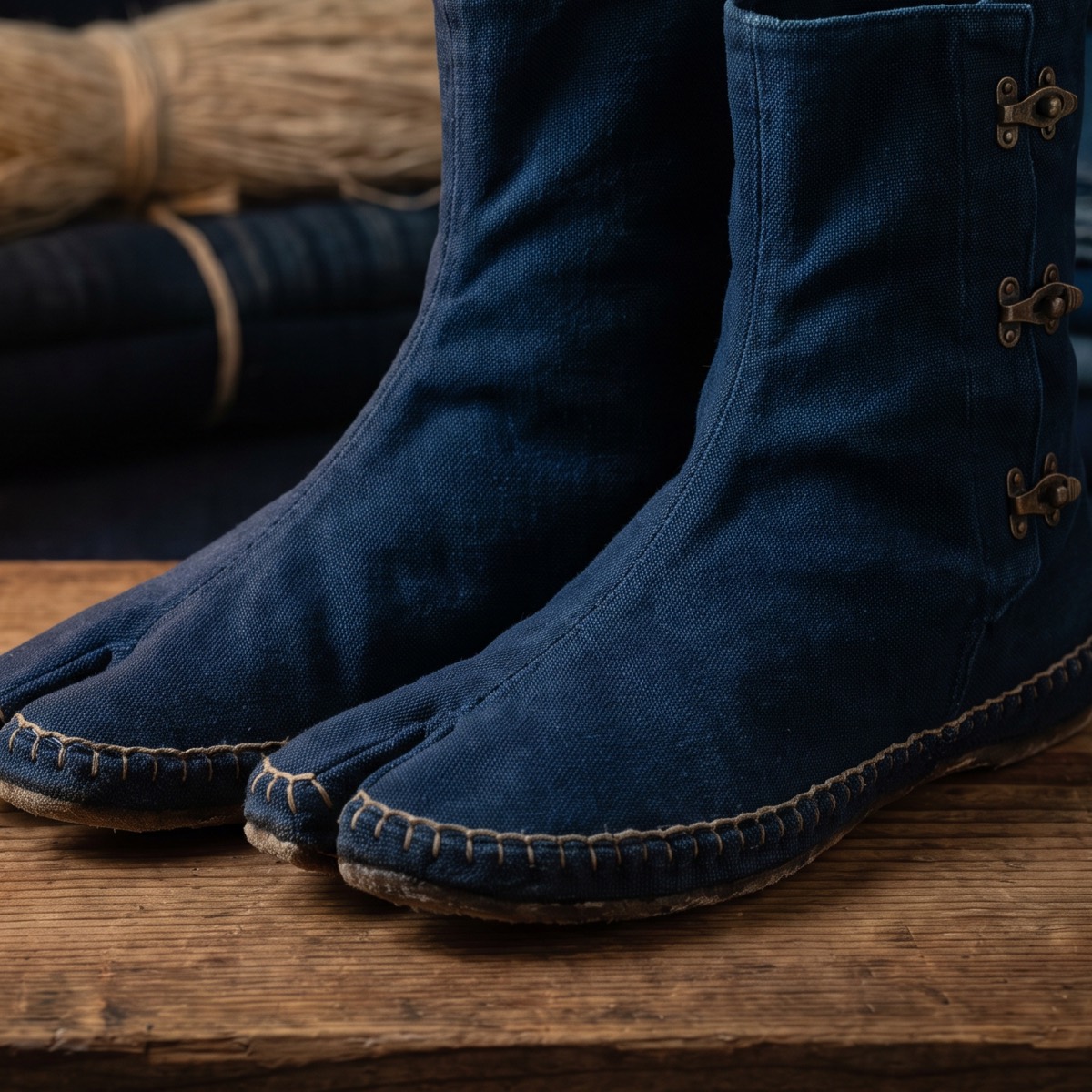
Tabi, split-toe — a pair, photographed on unbleached hemp cloth.地下jika — “underfoot”
足袋Tabi, split-toe — a pair

Sewn sole, twelve clasps, indigo over indigo. Give the length of the foot in sun and whether the toe runs wide.
8.6 × 3.6 × 3.0sun128 匁the pair
20 匁¥28,000wrapped
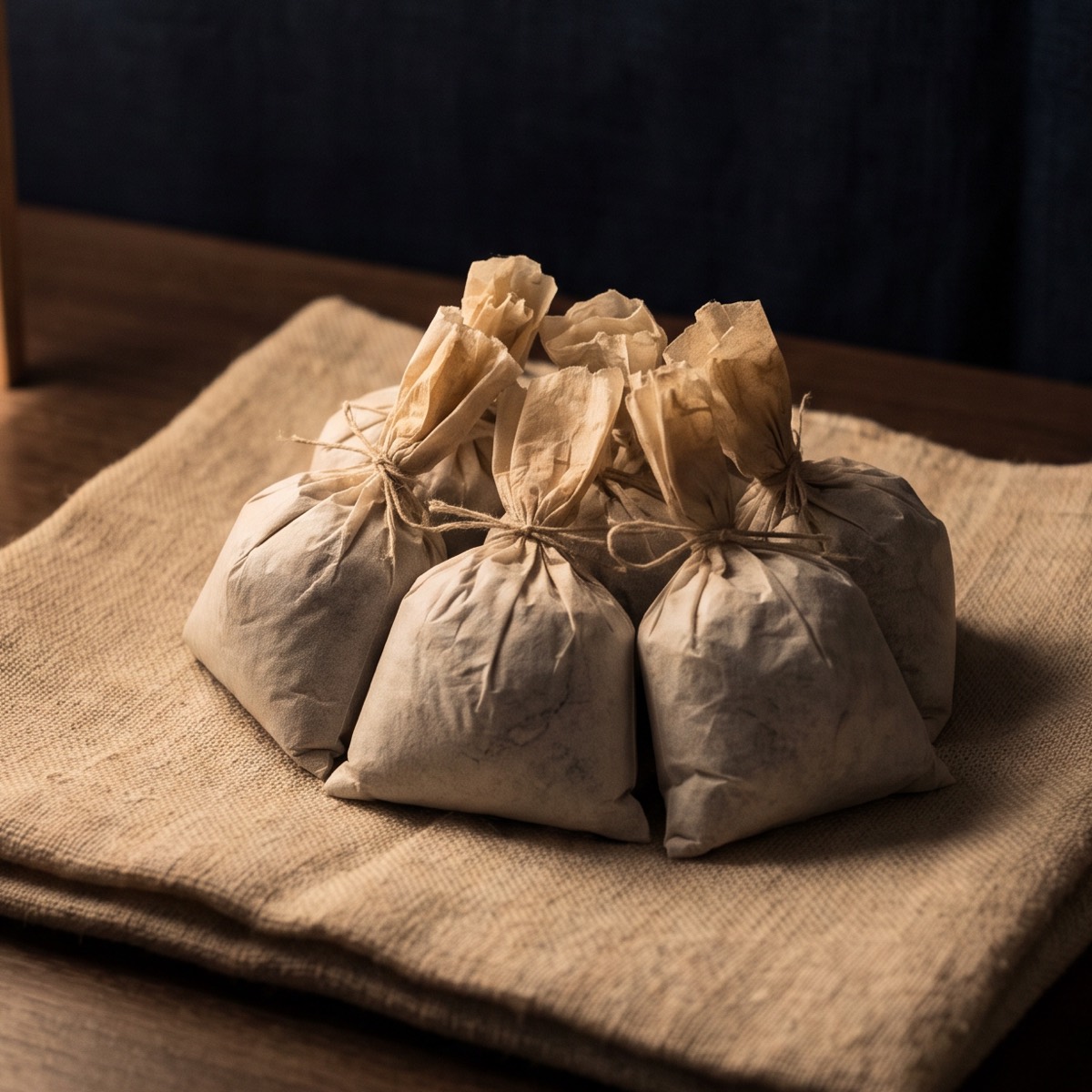
Metsubushi — six packets, photographed on unbleached hemp cloth.kiri — “fog”
目潰しMetsubushi — six packets

Ash, ground shell and pepper in twisted washi. They keep two years dry and no time at all wet.
4.0 × 3.0 × 1.3sun69 匁the six packets
14 匁¥19,000wrapped
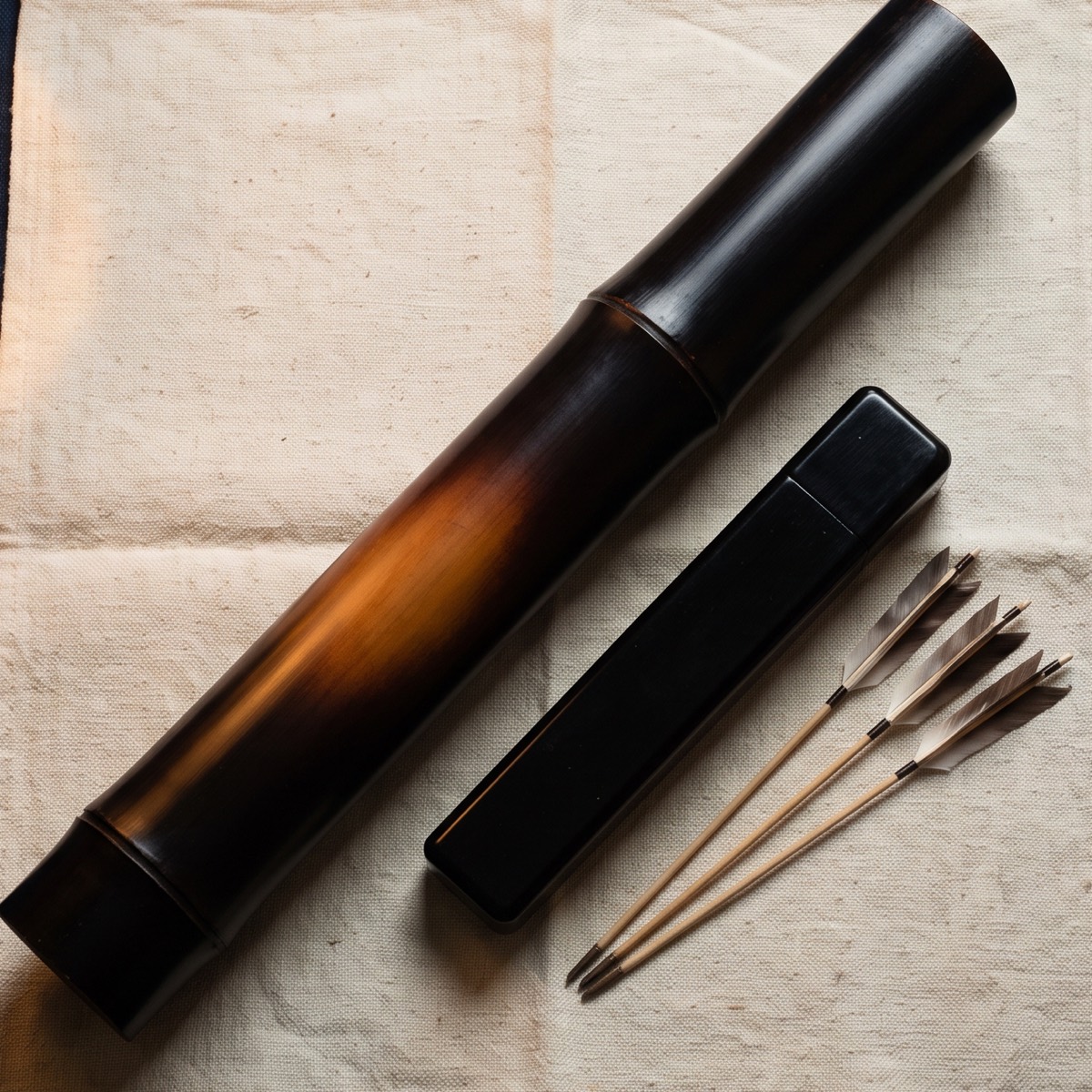
Fukiya — tube, lacquered case, twenty darts, photographed on unbleached hemp cloth.iki — “breath”
吹き矢Fukiya — tube, lacquered case, twenty darts

One shaku and five sun of bamboo, bored and lacquered inside so it takes no damp. The case passes for a pipe case, which is what it was.
15.2 × 2.3 × 1.7sun184 匁the each
63 匁¥88,000wrapped
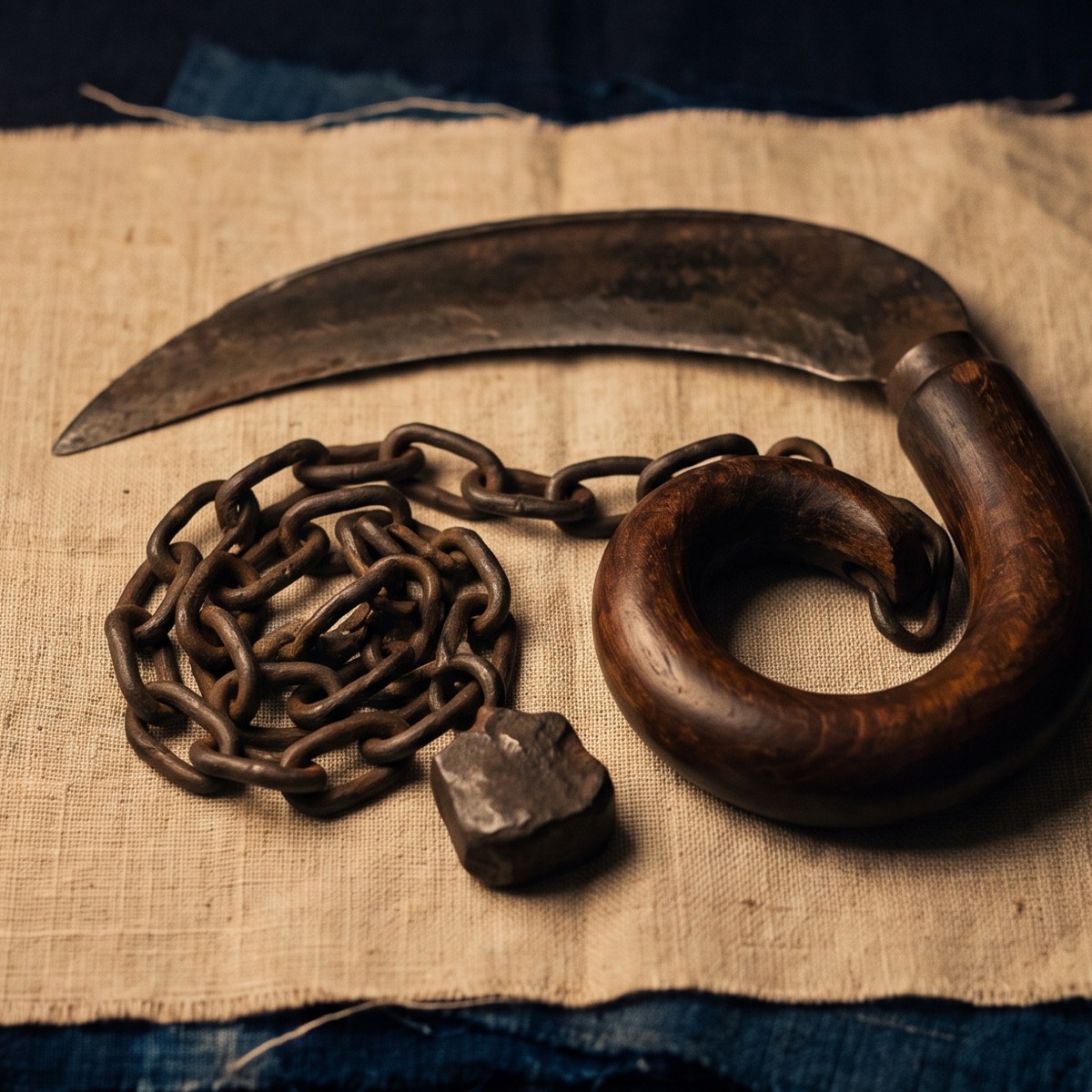
Kusarigama — sickle and three ken of chain, photographed on unbleached hemp cloth.kama — “the sickle”
鎖鎌Kusarigama — sickle and three ken of chain

A field sickle from Takefu, hafted long, with five and a half metres of forged chain and a weight. The sickle is a real sickle and is sold as one.
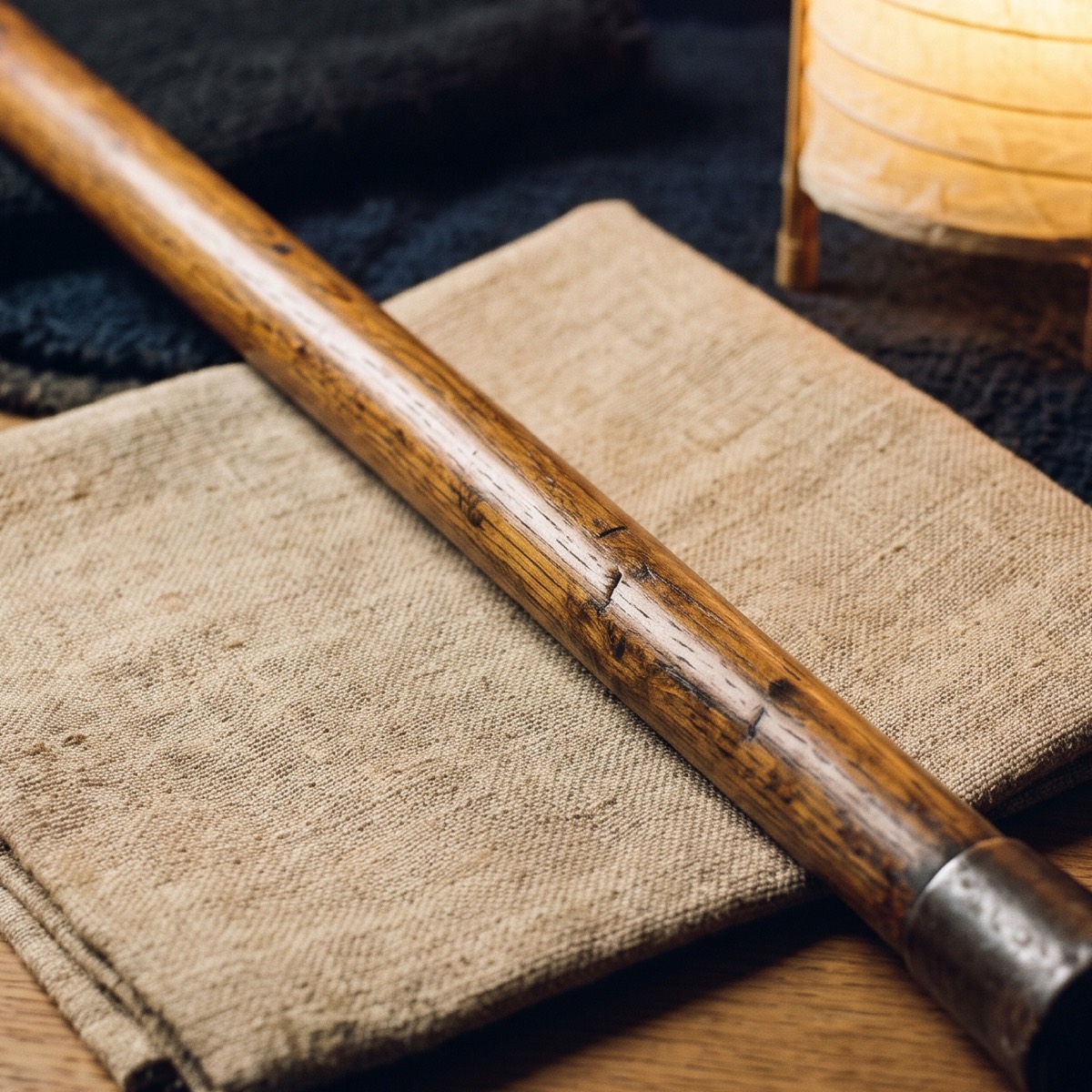
13.9 × 5.3 × 2.6sun640 匁the each
171 匁¥240,000wrapped
Shikomi-zue — the staff that is not one, photographed on unbleached hemp cloth.tsue — “the staff”
仕込杖Shikomi-zue — the staff that is not one

Three shaku of oak, and what is inside it is between the buyer and the smith. It is not wrapped. It is carried in the hand, in the open, the way a staff is.
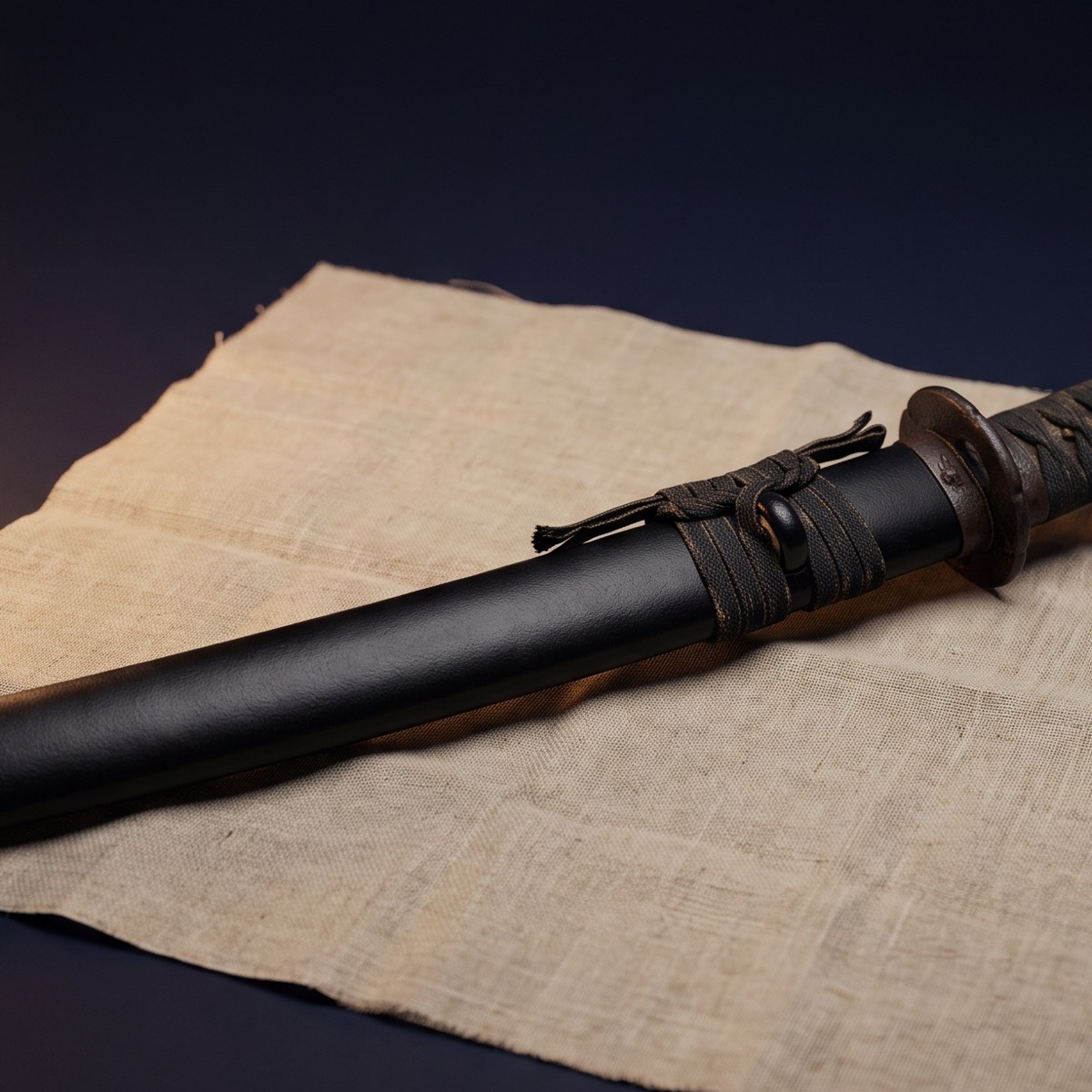
30.0 × 1.3 × 1.3sun307 匁the each
221 匁¥310,000carried in hand
Wakizashi — the short blade, photographed on unbleached hemp cloth.tan — “the short one”
脇差Wakizashi — the short blade

One shaku eight, mounted plain, no fittings that catch the light. Wrapped alone it reads as a bolt of cloth, which is the only reason this house will wrap it.
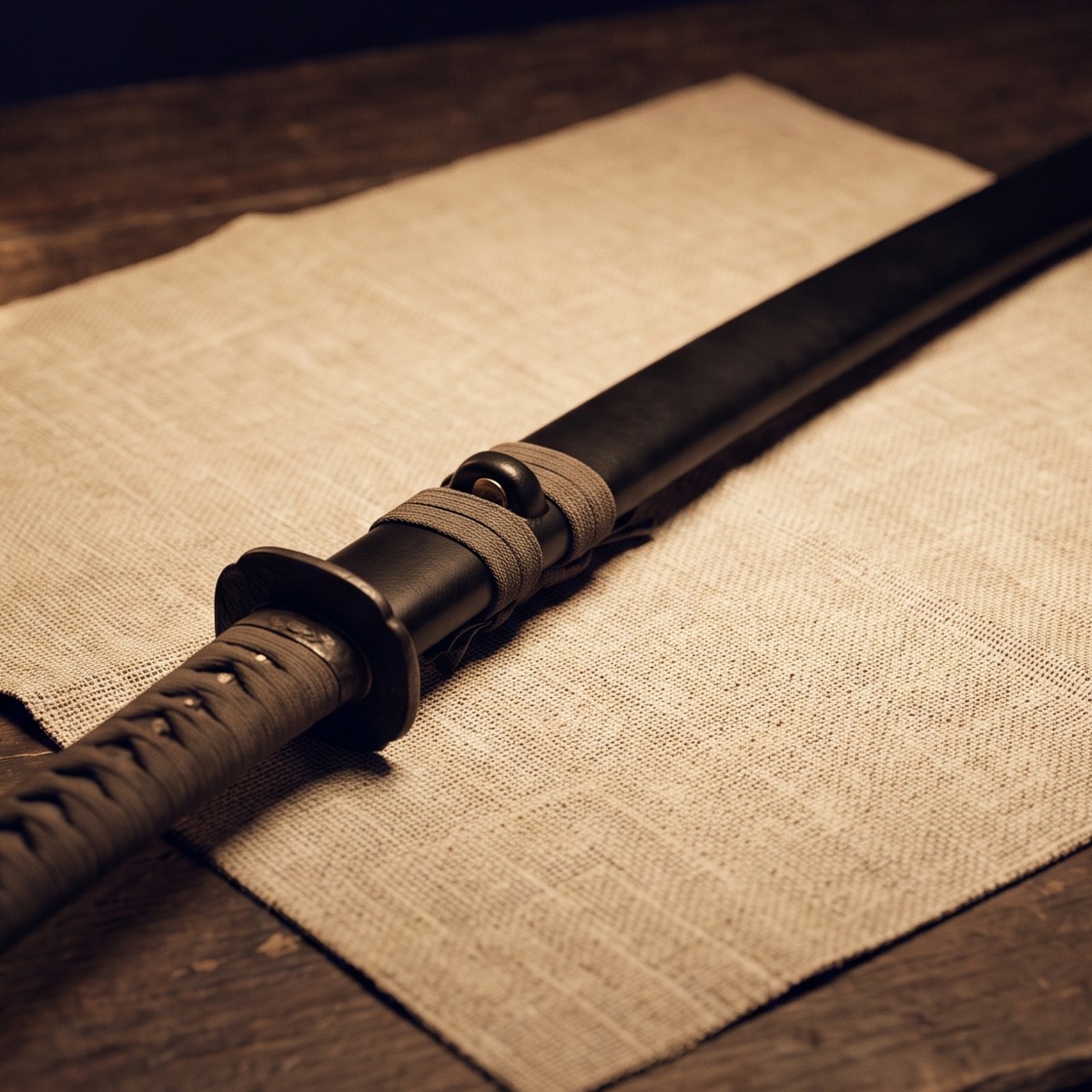
23.8 × 2.6 × 1.3sun280 匁the each
486 匁¥680,000wrapped
Katana — the long blade, photographed on unbleached hemp cloth.chō — “the long one”
Katana — the long blade

The house sells it and the house does not carry it. A long blade does not travel in cloth — it travels as a staff, or it travels in pieces, or it does not travel.
34.0 × 3.0 × 1.7sun347 匁the each
1,057 匁¥1,480,000not carried
An indigo-dyed cotton work jacket and trousers with sashiko stitching, folded into a neat rectangle on a plain wooden stand.
黒仕. Eighteen dips. Reversible; the other face is a labourer's brown.
A pair of antique Japanese iron climbing hand-claws with forged hooks, iron bands and aged leather straps, on hemp cloth.
爪. Sized to the hand. Give the span across the knuckles.
A pair of indigo split-toe cloth boots with sewn soles and metal side clasps, standing on a worn wooden board.
地下. Twelve clasps, sewn sole, indigo over indigo.
A ring-pommelled iron field tool laid on hemp cloth beside three four-pointed forged stars and two iron spikes.
小手・星・釘. Photographed the way the house takes them in: on the hemp, counted, before anything is decided about them.
A coil of pale hand-laid hemp rope with a four-pronged forged iron grapple spliced to its end.
夜縄. Twelve ken — twenty-one and a half metres. Hung with eighteen kan for a count of one hundred. Three in every forty fail that and are sold as rope.
帳 三明和五年 卯月The Awa indigo contract — kachi-iro from Tokushima

The cloth decides what you may take.

Lay the goods on the board and the house will tell you three things: which cloth it needs, whether it can be closed at all, and, the only question anyone actually asks, what a passer-by would take it for.

仕入 what goes on the cloth

Trade names on the left. Counts are what the house will actually hand over on the night; anything above these is two nights.

車剣 · 3.0 sunShuriken, four-point — ten — ¥42,000
棒手裏剣 · 5.9 sunBō-shuriken, spike — six — ¥36,000
小手苦無 · 9.9 sunKunai — the field tool — ¥58,000
手鉤 · 5.3 sunTekagi, climbing claws — a pair — ¥74,000
夜縄鉤縄 · 8.6 sunKaginawa — grapple and twelve ken of rope — ¥96,000
黒仕忍装束 · 9.9 sunShinobi shōzoku — jacket, trousers, hood, belt — ¥165,000
地下足袋 · 8.6 sunTabi, split-toe — a pair — ¥28,000
目潰し · 4.0 sunMetsubushi — six packets — ¥19,000
吹き矢 · 15.2 sunFukiya — tube, lacquered case, twenty darts — ¥88,000
鎖鎌 · 13.9 sunKusarigama — sickle and three ken of chain — ¥240,000
仕込杖 · 手持 carried in handShikomi-zue — the staff that is not one — ¥310,000
脇差 · 23.8 sunWakizashi — the short blade — ¥680,000
刀 · 別 not carriedKatana — the long blade — ¥1,480,000
結び the knot

A knot is a decision about cloth, not a detail. Each one takes a different allowance out of the square, and that allowance is what decides whether the corners meet.

The wrapping board seen from above: a mino cloth, 105 centimetres square, the goods laid out measuring 9.9 by 8.6 by 6.3 sun, folded with the ma-musubi. The house reads it as kusuribako — a medicine chest.9.9 × 8.6 × 6.3 寸8.6 寸布 三幅 · 105 cm square一尺
  • 一尺 — the bar at the top left is one shaku, 30.3 cm.

Seen from directly above, mid-wrap: the far and near corners are already over the goods, and the two that get tied are still open on their creases.

包みTHE PARCEL
9.9 × 8.6 × 6.3sun · 30 × 26 × 19 cm
目方WEIGHT
1112 匁1.11 kan · 4.17 kg
CLOTH NEEDED
三幅mino · 105 cm — needs 102
IN SILVER
174 匁¥243,000
薬箱見え kusuribako — a medicine chest

Square, compact, carried at the side in one hand. It reads as a physician's chest, and physicians walk at every hour.

4 on the sheetclosed with the ma-musubi in a mino cloth
この包みを頼む

The cloth is the parcel's diagonal, plus twice its height, plus the knot's allowance. Written on folio four in 1810 and not revised since, because it has not needed to be. Every number above comes out of that one line — which is why a single added to a full sheet can cost a whole layer of height and push a parcel from a physician's chest to a porter's load.
帳 四文化七年 神無月The four sources fixed; the testing rule written
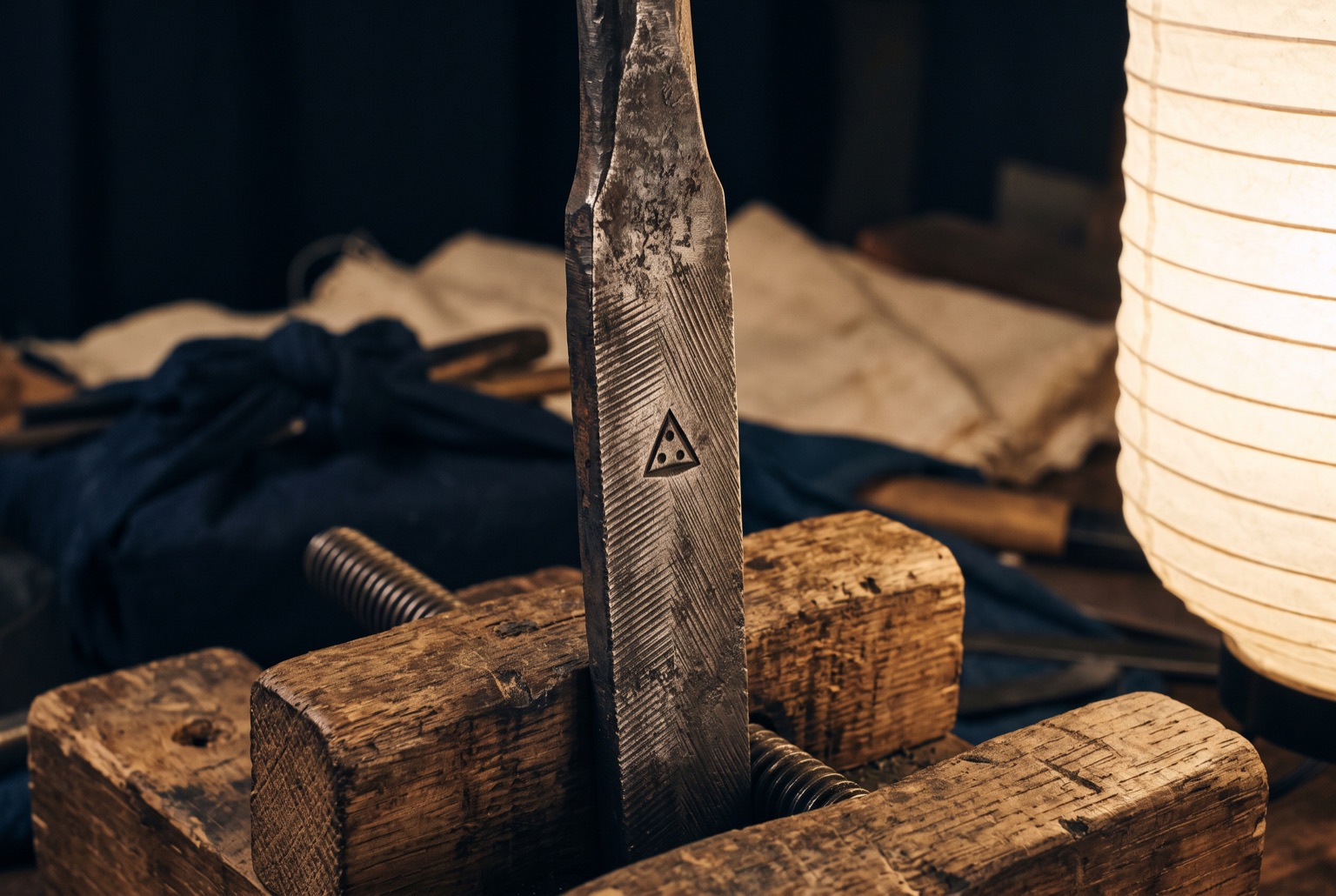
Extreme close-up of the bare iron tang of a hand-forged tool held in a wooden vise, file marks and a small chiselled punch mark visible.
The punch. Every piece the house takes in carries its maker's mark on the tang, under the wrap, where the buyer will never look. That is the point: it is not for the buyer.

Four houses make it. This house only proves it.

Tsutsumiya has never owned a forge. It owns a beam, a mat, and a standing rule about what happens to work that fails.

Every edge is drawn once across a rolled straw mat and inspected at the lantern. Every rope is hung with eighteen kan, 67.5 kilos, for a count of one hundred. Every suit is soaked and dried once, because indigo that gives up its colour in rain gives up the wearer with it.

Roughly one piece in twelve does not come through that, and the house says which. Failed rope is sold as rope. Failed edges go back to the smith with the mat still on them. The register's prices are for the eleven.

伊賀上野

Iga-Ueno · Iga, Mie

Field iron: hooks, claws, the grapples, the blowpipes. Small shops in the valley that have supplied this trade longer than this house has existed, and will not be named further.

Tested: the hook, at 18 kan.

播州三木

Banshū Miki · Harima, Hyōgo

Edged tools since the castle at Miki came down and the carpenters stayed. Plate, spikes, the short blade. The best steel and the plainest mountings.

Tested: the edge, on the mat.

越前武生

Echizen-Takefu · Echizen, Fukui

Sickles, since 1337. The kusarigama's blade is an ordinary Takefu field sickle, hafted long — the house buys it from the same shed the farmers do.

Tested: the haft, in the vise.

阿波徳島

Awa Tokushima · Awa, Tokushima

Indigo. Kachi-iro, eighteen dips, and the sashiko thread to go with it. The contract on folio three has been renewed every generation since 1768.
Tested: the dye, wet and dried.
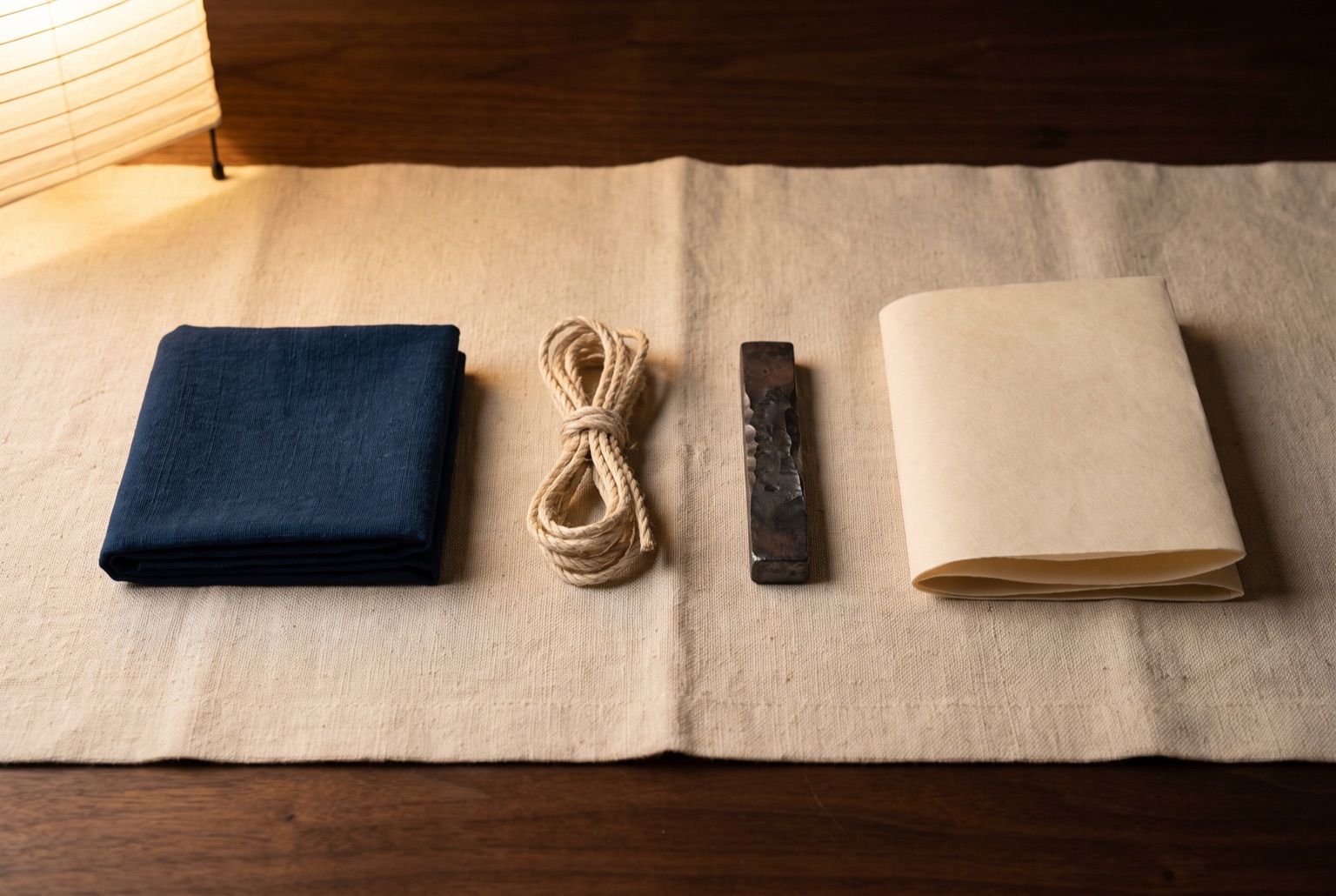
Four material samples laid in a row on pale hemp cloth: folded indigo cotton, a coil of hemp rope, a bar of forged iron, and a sheet of unbleached washi.
What the house actually buys. Indigo, hemp, iron, paper. Every line in the register upstairs resolves to one of those four, and the house's whole opinion is about which of them a thing should disappear into.
帳 五天保三年 長月The wrapper's six knots recorded

Six knots, and knowing which.

The whole of the wrapper's craft is choosing between them before the cloth is off the shelf.

A 真結び lies flat and comes undone in one pull, which is a virtue and also the reason it is not used on anything that must survive being set down hard. A 二つ結び costs four sun of cloth and stops the contents moving. A 肩掛け costs twenty and buys back both of the carrier's hands, the most expensive thing on this page measured in cloth.

He has been at the board since he was eleven. He does not ask what is in the parcel and could not tell you afterwards, which is not discretion so much as forty years of not being curious about boxes.
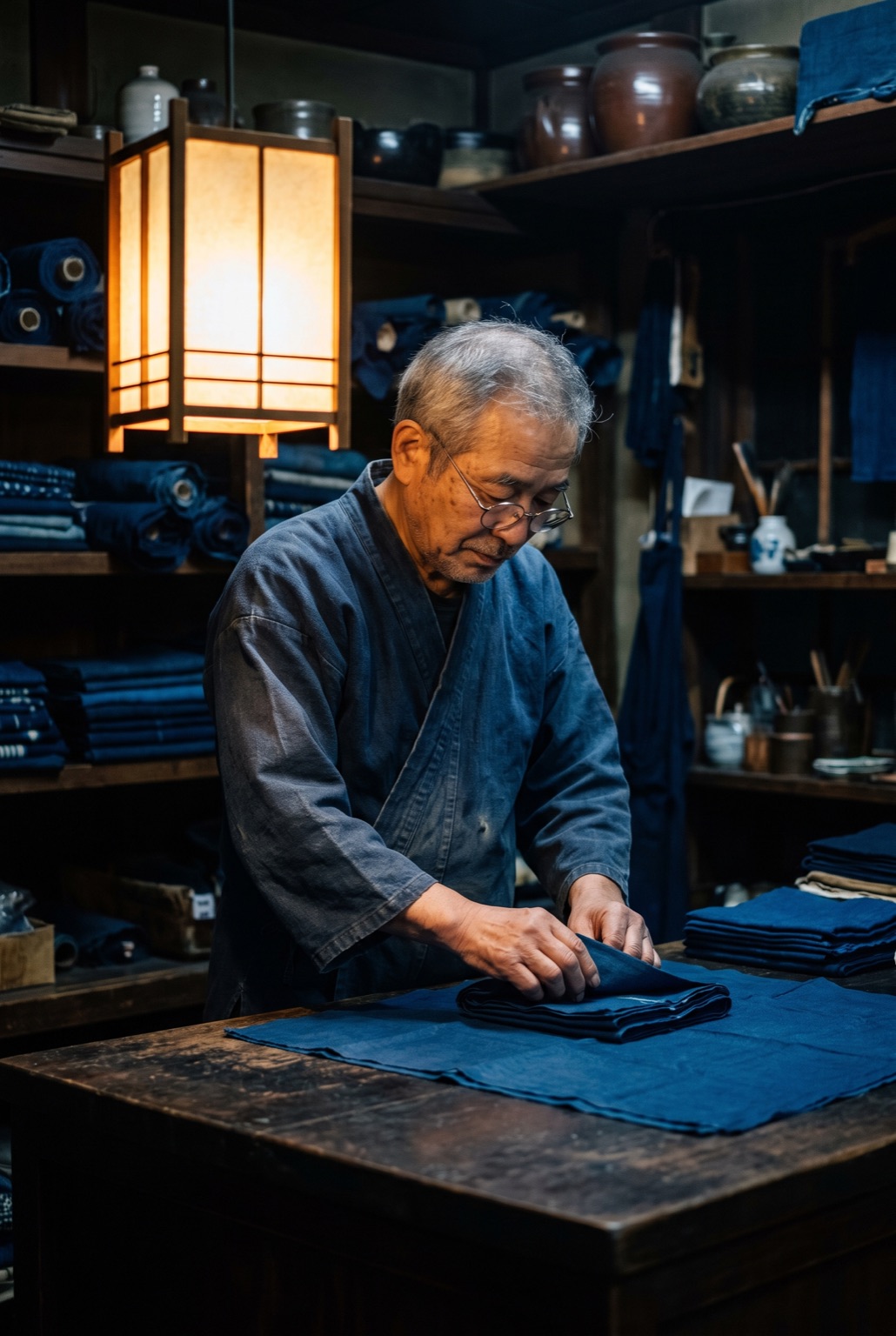
An older shopkeeper in an indigo work jacket standing at a worn counter, folding a large square of deep indigo cloth into quarters, face lit by the lantern.
The wrapper, at the counter. The fold before the fold: a cloth is squared on the board every time, even when the same cloth was squared an hour ago.
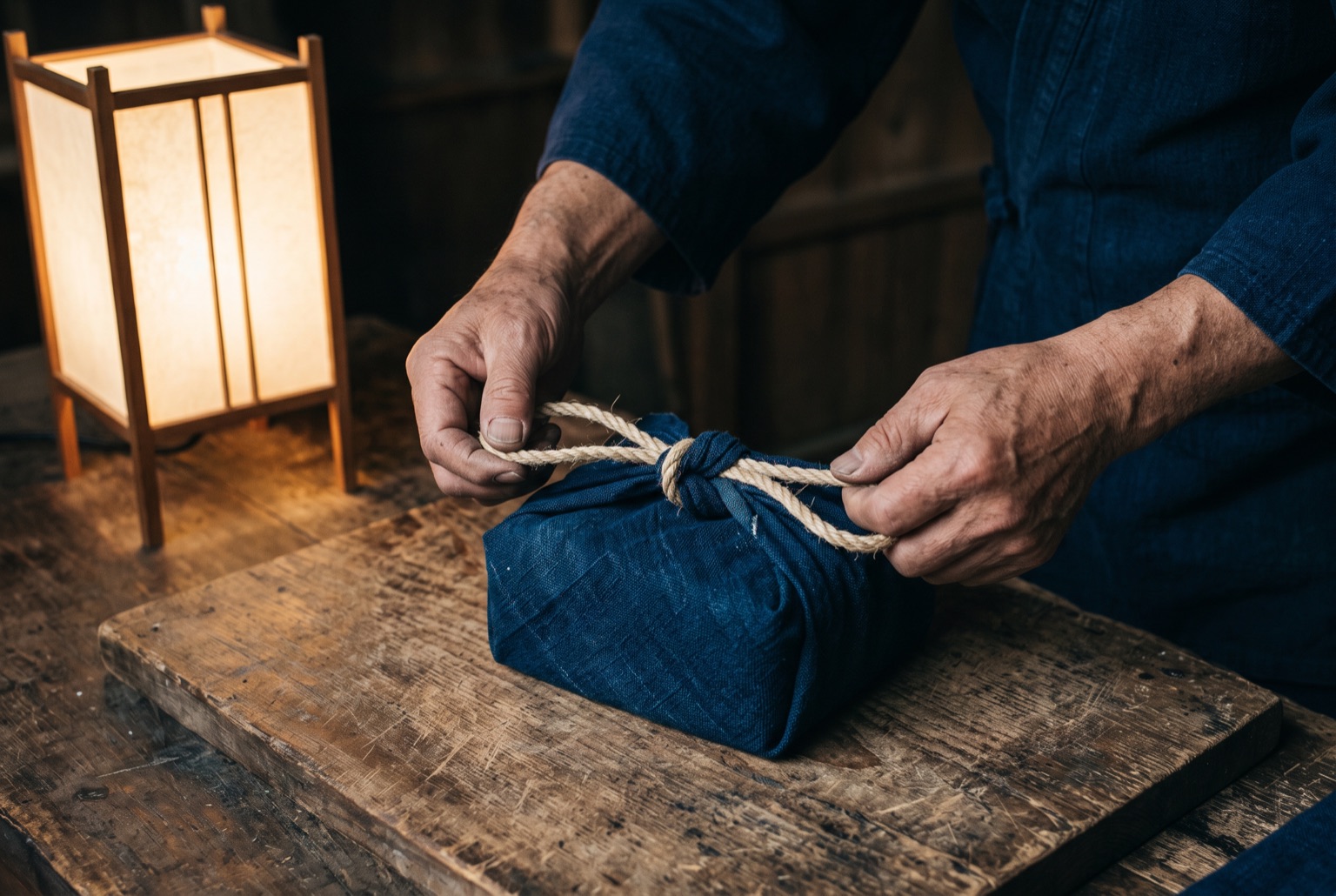
Close view of two weathered hands drawing a knot tight over a compact parcel wrapped in deep indigo cloth on a wooden board.
真結び. The knot is drawn once, and if it is drawn twice the cloth is taken off and squared again. The house counts a re-tie as a failure and records it, which is the only place in the ledger where the house grades itself.
帳 六令和七年 皐月The handover terms, as they stand

How it reaches you.

Nothing is posted and nothing is delivered to a door. A parcel is set down in a named ward at a named hour and is picked up by the person who ordered it. That is the whole arrangement, and it has not changed since the canal was open water.

Required, and it is the only thing here that is. The house takes no order from a name it has not heard from someone it already knows. Give the name they use with us.

The house cannot take this without a word from someone. If you have no one, say so here in plain words and we will write back once, and only once.

The house does not ask for the other one.

Give the house something to write on the line.

Where the parcel is set down. Not an address, a ward.

THE HOUR

Old reckoning. The shop is dark before 暮六つ and the wrapper is gone after 九つ.

One reply, with the night and the ward. Nothing after that.

That is not an address a reply will reach. Check it and send again.

Sizes: the span across the knuckles, the length of the foot in sun. Or a night that will not work.

This opens your own mail and sends an order request. No card, no payment, nothing taken here.